
How to Choose Safe Weight Loss Supplements in the USA: Full Checklist
Thinking about buying weight loss supplements? Do you know how to check if they’re actually SAFE?
BLOGS
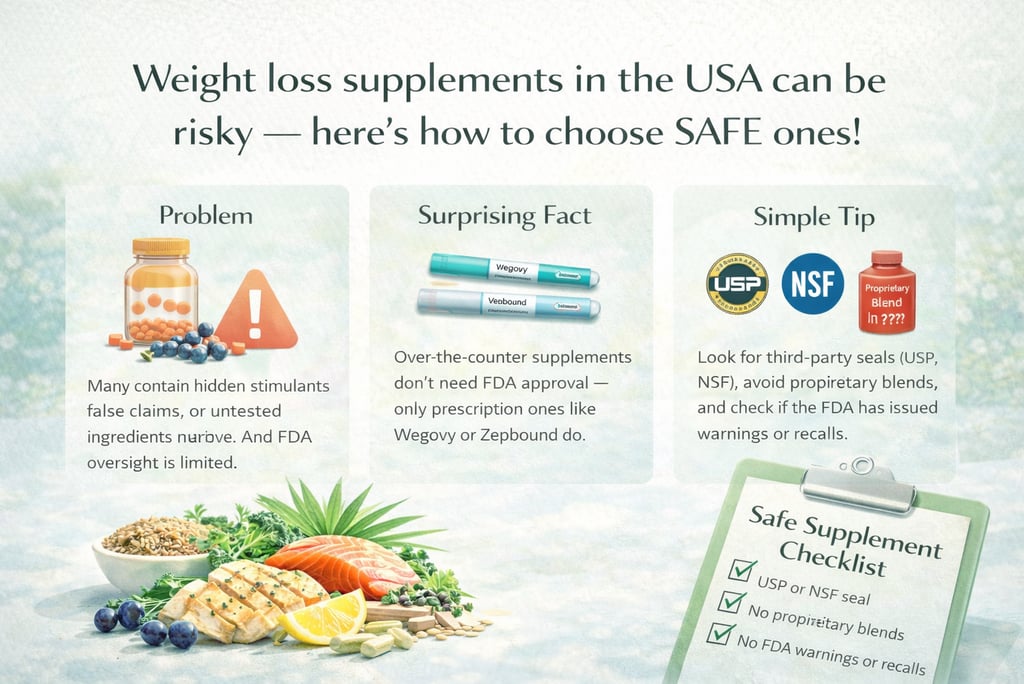
Weight loss supplements in the USA can be risky, here’s how to choose SAFE ones!
Finding weight loss pills in the USA might seem tough - there’s always someone promising fast fixes. Lots say they’ll burn fat like magic, yet plenty don’t work - or worse, could be risky. Stick to ones tested by research instead of flashy ads pushing empty claims.
This complete list guides you to pick what’s best for your body - without falling for slick ads. If you’re looking at store-bought supplements or thinking about doctor-prescribed meds, use this plan to keep things safe.
What Are Weight Loss Supplements?
Weight loss pills often contain stuff like vitamins, plants, or amino acids - meant to help control body weight. These products, common in the U.S., fall into a category called dietary supplements; they’re watched by the FDA thanks to a law from 1994 named DSHEA.
Few medicines get the green light for long-term weight control, such as semaglutide (Wegovy) or tirzepatide (Zepbound), but only if used alongside healthy eating and physical activity. Unlike these treatments, other options skip the usual safety checks before hitting shelves.
Common Problems or Challenges
USA consumers face real risks when choosing supplements:
Hidden risks: a few have undeclared boosters, hormones, or impurities tied to heart problems - or even harm to the liver.
Fake promises: Labels shout "burn fat fast" but never back it up - so you lose cash, feel let down.
Some supplements might interfere with drugs - this matters more if you're dealing with issues like high BP or sugar problems.
Some low-cost imports might not work well - or could be contaminated.
Benefits of Choosing Wisely
Picking the right supplements could help you reach your aims safely - while skipping risky ones might keep you outta trouble
Metabolic Boost: Compounds such as green tea extract could help burn calories when combined with balanced habits.
Fiber-rich foods might keep hunger at bay - they tend to fill you up faster. A solid choice when trying to manage how much you eat.
Good health usually comes from smart picks - these might add vitamins your meals miss.
Full Safety Checklist
Follow this list each time - step by step
1. Verify FDA Status
Does it have FDA approval for shedding pounds - like Wegovy, Zepbound, or Qsymia? They go through strict trials Look up OTC supplements on the FDA site - see any alerts or pullbacks. Skip them if they show up there.
2. Check Third-Party Testing
Check for USP, NSF, or ConsumerLab marks - since these show it's clean, strong, yet free from harmful stuff. Move on if it's not checked - quality rules can differ a lot.
3. Read the Label Carefully
Serving Size & Ingredients: Total honesty here - skip secret mixes that hide amounts. Legit claims state they "help with losing weight"; shady ones claim they "make you lose weight fast." If something seems off, let the FTC know right away. Allergens or warnings - there? That’s honest. A clear move, nothing hidden.
4. Research Key Ingredients
Glucomannan helps you feel full between meals - just take it with plenty of water so things go smoothly.
Green tea extract might give your energy a slight nudge - best to keep intake low if you react badly to stimulants.
Caffeine can sharpen focus and support activity levels - stick below 400mg daily unless told otherwise by a doctor.
Garcinia Cambogia doesn't have much backing from studies - some red flags around liver health popped up.
Raspberry ketones are everywhere online - truth is, they barely do anything based on real proof.
Avoid ephedra, also skip synephrine, or better yet stay clear of DNP - banned stuff, risky too.
5. Evaluate Clinical Evidence
Check PubMed or NIH to find research on that specific product or strain. Instead of animal tests or personal stories, focus on studies done with people. Most folks shed about 2 to 5% of their weight - when eating right while staying active.
6. Price & Source Check
Get it at well-known stores - try Amazon if the seller’s checked, or just head to Walmart or your local drugstore. Way too low? That’s sketchy - good stuff runs $20–50 a month. Look at the expiry date - keep probiotics cold. Store them right or they’ll stop working.
7. Consult Professionals
Check with your doc or pharmacy pro before starting - particularly when you're expecting, feeding a baby, or already taking pills. Check your blood to see if thyroid or hormone problems are making you gain weight.
Who Is It For?
Fine for driven grown-ups ready to shift their habits. Best suited for:
People who have a BMI over 27 along with medical concerns.
Individuals who want a little help - say, fiber to feel fuller.
Not suitable for teenagers, expectant mothers, or anyone chasing fast results.
How to Use It or Add It to Your Routine
Begin with a small amount to check how your body reacts.
Match with a 500-calorie drop each day, hit 150 minutes of movement every week, get between 7 and 9 hours of rest nightly.
Check results every week - quit if nothing shifts within a month or two.
Take breaks now and then - keeps things from getting sticky.
Pros & Cons
Pros:
Available over the counter - no doctor's note needed.
Might help you stick to your eating plan.
Affordable when it comes to simple needs - say, fiber internet.
Cons:
Some proof’s shaky for many.
Some folks get shaky, plus stomach troubles.
No rule makes sure things work out.
Safety, Warnings & Disclaimers
Watch out for "sure losses," stars promoting it, or fake photo tricks.
Side effects: Keep an eye out for fast heartbeats or feeling sick - quit right away, get support if it happens.
Outcomes differ - pills by themselves usually don't cut it.
Check with your doctor first - before you begin.
Conclusion
Picking a safe weight loss pill means staying doubtful and doing your homework.
Go by this list:
look for FDA approval, outside testing labels, proven components - also get a doctor’s opinion. Nothing beats good daily routines instead of pills; yet solid picks might help you along the way.
Disclaimer:
This content is for informational purposes only and does not replace professional medical advice. Always consult your healthcare provider before starting any new supplement or routine.
Related Blogs
USA Wellness Pick © 2026

Evidence-Based Health & Wellness Guidance for Americans