
Safe Weight Loss for Americans: How to Lose Fat Without Extreme Dieting
Learn how Americans can lose fat safely without extreme diets using balanced nutrition, smart exercise, and sustainable habits backed by science.
BLOGS
How Americans Can Lose Fat Safely Without Extreme Diets
Folks across America dream of shedding body fat, though countless find themselves buried under waves of intense food fads. Trends like keto, juice-only routines, long fasts, or so-called detox schemes shout instant change - still, exhaustion, missing nutrients, or bouncing back pounds soon after usually follow. What truly matters to many living here isn’t speed - it’s steady progress without risk, a rhythm that moves smoothly alongside regular days.
Here’s what helps: shedding body fat without going hungry, skipping whole categories of food, or being stuck at a fitness center all day. Studies along with everyday proof point to slow tweaks in how we eat, move, rest, stay calm - these build up nicely across months. Such steps fit more smoothly into packed U.S. routines full of office demands, kids’ needs, meals eaten away from home.
What happens when someone tries too hard to shed pounds?
Often, they pick methods that backfire. Fat goes down best without drastic cuts or magic rules. Bodies react poorly to sudden changes in eating habits. Many jump into strict plans full of restrictions they cannot keep. Skipping meals leads to hunger later. That kind of cycle hides real progress. Small choices add up louder than big promises.
Think about timing snacks a bit earlier each day. Or swapping one sugary drink for water three times weekly. Movement matters just as much as food decisions. Walking after dinner shifts something subtle inside. Sleep affects cravings more than most assume. When nights are short, mornings bring stronger urges for sweets. Stress piles on extra pressure to eat certain foods. Tackling it with breathing exercises helps some people stay steady. Progress looks different for every person watching the scale move.
Fat loss happens when the body uses more energy than it takes in over time. This concept is often described as a calorie deficit, but that doesn’t mean eating as little as possible. Instead, it means creating a moderate, sustainable gap between calories consumed and calories burned.
In the U.S., many people struggle with fat loss because of:
Highly processed, calorie-dense foods
Large portion sizes
Sedentary work and screen time
Inconsistent sleep schedules
Chronic stress
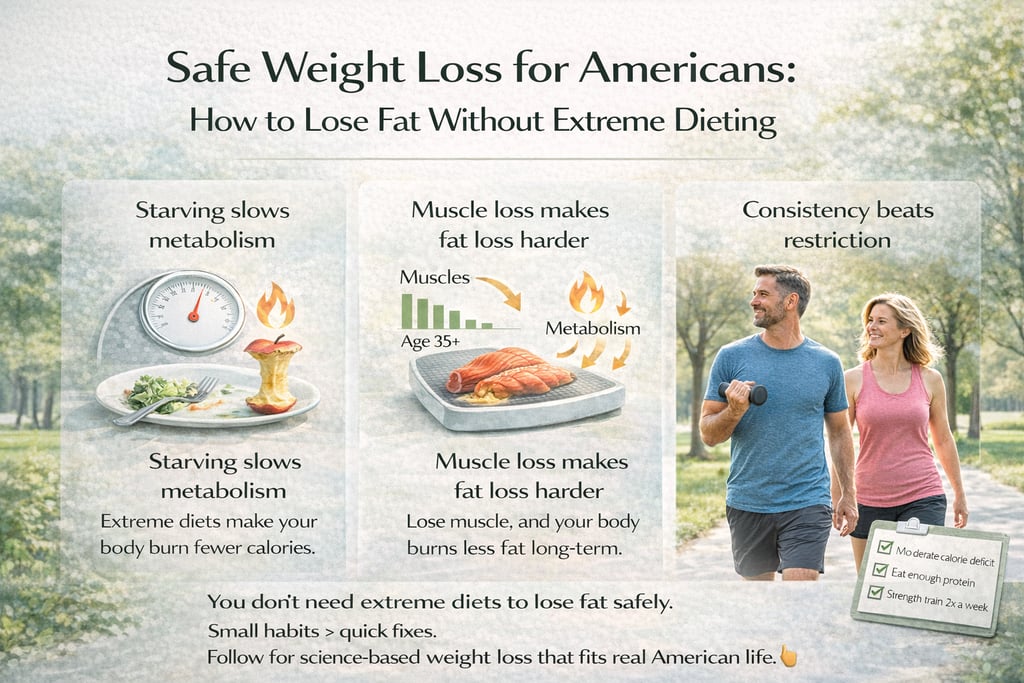
Extreme diets try to “fix” these issues quickly by cutting calories too low or eliminating carbs or fats entirely. While this may lead to short-term weight loss, it often slows metabolism, increases cravings, and causes muscle loss—making long-term success harder.
A safer approach focuses on habits, not hacks.
Why This Topic Matters for Americans
Fat loss isn’t just about appearance. For many Americans, excess body fat is linked to health concerns such as high blood sugar, joint pain, fatigue, and heart strain. At the same time, extreme dieting can create its own problems, including:
Nutrient deficiencies
Hormonal imbalances
Loss of muscle mass
Poor mental health and food anxiety
Because healthcare costs are high in the U.S., prevention through sustainable lifestyle changes is especially important. Learning how to lose fat safely helps people:
Protect long-term health
Avoid repeated “yo-yo dieting”
Maintain energy for work and family
Build habits they can keep for life
Clear explanations of key ideas
Fat Loss vs. Weight Loss
Shedding pounds means losing more than just fat - water slips away too, along with some muscle mass. Body changes show up in different forms, not only on a scale but inside too.
Burning fat means shedding extra pounds without losing strength. Muscle stays firm even as weight drops.
Water and muscle vanish fast on extreme diets, yet scales may show progress. Keeping strength matters more than quick drops.
Calories Still Matter, But Quality Matters More
What you eat shapes results more than total calories alone. Paying attention to serving amounts makes a difference, yet what foods you choose matters even more. Eating well means noticing both size and substance without obsessing over numbers. How full you feel ties closely to the kind of nutrients on your plate. Quantity plays a role, sure, but quality guides long-term habits.
Consistency Beats Perfection
Showing up every day matters most. Tiny actions, repeated without pause, do better work than flawless choices that stop after a few days. One steady step beats a sprint that ends in rest.
How fat loss works without extreme measures
Most folks can lose body fat steadily by aiming for half a pound up to one pound each week. That kind of progress tends to come from eating slightly less than your body uses daily, which can often be achieved through simple adjustments in dietary habits and mindfulness about food choices. By making small but effective changes to your eating patterns, you are setting yourself up for sustainable weight loss over time.
Eating slightly fewer calories
A step further changes the view slightly, as it's important to incorporate more whole foods into your meals. Progress unfolds without rushing it, empowering you to develop healthy eating relationships with your food. Direction shifts just enough to notice gradual improvements in your overall well-being, allowing you to appreciate the journey toward your fat loss goals.
Avoiding drastic cuts
Staying strong means holding on to muscle, which is crucial for maintaining a healthy metabolism. Protein feeds those muscles during workouts, providing the essential nutrients needed for repair and growth. When lifting weights, your body works hard to ensure tissue gets stronger instead of fading away, enhancing your physique and strength. Less muscle inevitably slows down daily energy burn, and losing that muscle mass makes shedding fat tougher than before, ultimately leading to frustration and potential plateaus in your weight loss journey.
Aim to include protein at each meal
To optimize your fat loss efforts, incorporate resistance training 2–4 times per week. This not only supports muscle maintenance but also helps keep your metabolism revved up. When your blood sugar stays steady throughout the day, you will find yourself wanting fewer snacks, as your body efficiently manages energy levels. That smooth balance helps avoid sudden dips in energy, ensuring you're energized and focused, which is vital for staying active and motivated.
Combine protein, fiber, and healthy fats
To maintain a balanced diet, it’s essential to avoid long periods of undereating followed by overeating, as this cycle can lead to unhealthy habits and emotional stress related to food. By making smart choices that include a combination of protein, fiber, and healthy fats at each meal, you create a satisfying and nourishing diet that supports your fat loss journey while also promoting overall health and wellness.
Practical Nutrition Strategies That Work in the U.S.
Build Balanced Plates
A simple American-friendly plate method:
½ plate: Vegetables or fruit
¼ plate: Protein (eggs, fish, beans, chicken, tofu)
¼ plate: Whole grains or starchy vegetables
Add healthy fats in small amounts
Focus on Protein First
Protein supports muscle, satiety, and metabolism.
Easy U.S. protein options:
Eggs
Greek yogurt
Cottage cheese
Lean meats
Beans and lentils
Protein shakes (as supplements, not replacements)
Don’t Fear Carbs, Choose Better Ones
Carbs are not the enemy. Quality matters more than elimination.
Better carb choices:
Oats
Brown rice
Potatoes
Whole-grain bread
Fruits
Exercise Without Overdoing It
Strength Training Is Key
You don’t need to be a bodybuilder. Simple resistance exercises help preserve muscle and burn fat.
Examples:
Bodyweight squats
Push-ups
Resistance bands
Dumbbell workouts
Walking Is Underrated
Walking is one of the most effective and sustainable fat-loss tools for Americans.
Low stress
Easy on joints
Can be done daily
Aim for 7,000–10,000 steps per day when possible.
Avoid Overtraining
More is not always better. Excessive cardio combined with low calories can increase fatigue and slow progress.
Lifestyle Factors Most Diets Ignore
Sleep Matters More Than People Think
Poor sleep increases hunger hormones and cravings. Tips:
Aim for 7–9 hours per night
Keep a consistent bedtime
Limit late-night screen use
Stress and Fat Loss
Chronic stress can make fat loss harder by increasing cortisol levels. Simple stress-reduction habits:
Daily walks
Deep breathing
Short breaks from screens
Light stretching or yoga
Common Mistakes Americans Make
Skipping Meals to “Save Calories”
This often backfires and leads to overeating later.
Relying on Extreme Restrictions
Cutting entire food groups makes diets harder to maintain.
Expecting Fast Results
Healthy fat loss is gradual. Expecting rapid change leads to frustration.
Ignoring Strength Training
Only doing cardio can lead to muscle loss and slower metabolism.
Benefits of Losing Fat Safely
Better energy levels
Improved mood and focus
Stronger metabolism
Reduced risk of weight regain
Improved long-term health markers
Better relationship with food
Practical Tips to Apply This Today
Start with one habit, not ten
Add protein to breakfast
Walk 10 minutes after meals
Drink more water before cutting food
Strength train twice per week
Track progress weekly, not daily
FAQs
1. Can I lose fat without counting calories?
Yes. Many Americans succeed by focusing on portion control, protein intake, and consistent movement.
2. Are extreme diets dangerous?
They can be. Very low-calorie or restrictive diets may cause nutrient deficiencies and muscle loss.
3. How long does safe fat loss take?
Expect steady progress over months, not weeks. Slow loss is more sustainable.
4. Do supplements help with fat loss?
Supplements may support nutrition but should never replace healthy eating and exercise.
5. Is strength training necessary?
It’s strongly recommended to preserve muscle and support metabolism.
6. Can older adults lose fat safely?
Yes, with proper nutrition, resistance training, and medical guidance when needed.
Conclusion / Final Thoughts
Americans do not need extreme diets to lose fat safely. In fact, those approaches often make things worse in the long run. Sustainable fat loss comes from balanced nutrition, regular movement, good sleep, and stress management, habits that fit into real life.
By focusing on consistency instead of perfection, and health instead of speed, fat loss becomes not only possible but maintainable. Small changes, done daily, add up to meaningful results over time.
Informational Disclaimer
This article is for informational purposes only and does not replace professional medical advice. Always consult a qualified healthcare provider before making major changes to diet or exercise, especially if you have underlying health conditions.
Related Blogs
USA Wellness Pick © 2026


Evidence-Based Health & Wellness Guidance for Americans