
Walking vs Gym Workouts: What Works Better for Weight Loss in Busy Americans?
Walking vs gym workouts for weight loss in busy Americans. Learn which works better, how to choose, and how to lose fat safely without extremes.
BLOGS
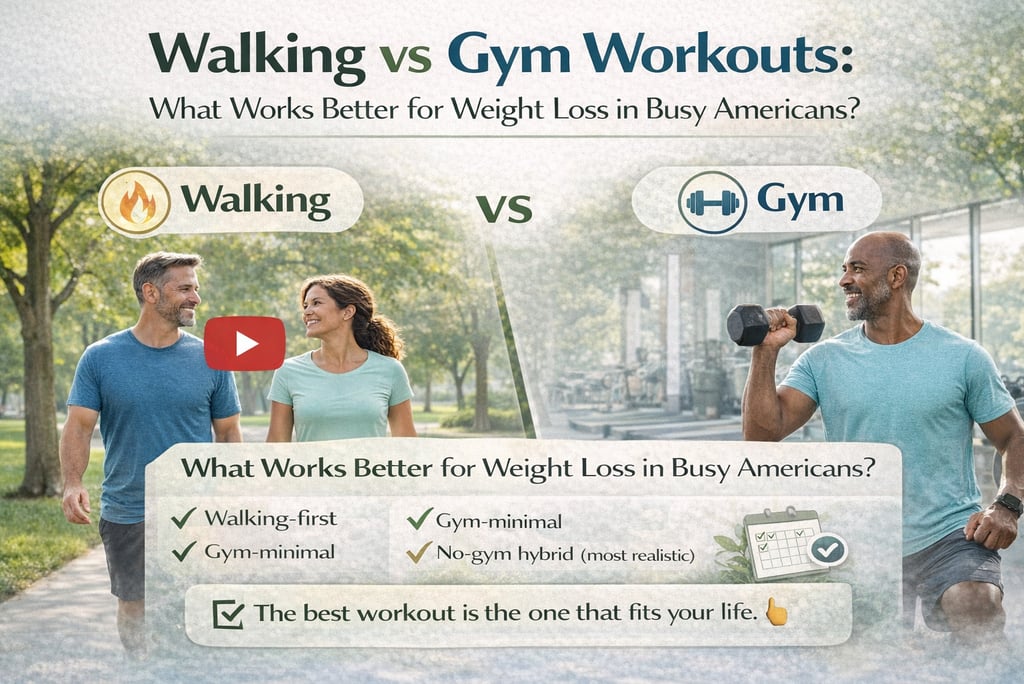
Walking vs Gym Workouts: What Works Better for Weight Loss in Busy Americans?
Weight loss often seems like an uphill battle for people with packed schedules. With demanding jobs, household duties, traffic-filled commutes, along with daily pressures, fitting in regular physical activity becomes tough. Because of this reality, one query pops up frequently - can simply walking help shed pounds effectively, compared to more intense routines at fitness centers?
Most people see social media praising extreme workouts as essential for shedding fat, yet some insist a simple walk every day does the trick. Reality fits closer to the middle ground. Walking helps reduce body weight - just not the same way lifting weights does. Each method aligns better with certain habits, preferences, schedules. One isn’t clearly superior; effectiveness depends on consistency, effort level, personal goals.
This piece examines walking alongside gym sessions, focusing on people in the U.S. who have little free time. One way moves the body slowly outdoors; the other often means structured effort indoors. Fat reduction appears with both, though mechanisms differ. Time saved matters - walking requires no commute to a facility. Sticking with one habit regularly beats occasional intense efforts. Long-term success links more to ease of routine than workout intensity. Choice depends less on ideal conditions and more on daily reality.
Weight loss happens when the body consistently uses more energy than it takes in. Exercise helps by:
Increasing calorie burn
Preserving muscle mass
Improving metabolic health
Supporting stress and sleep regulation
However, not all exercise affects the body in the same way. Walking is a low-intensity, steady activity, while gym workouts often include strength training and higher-intensity cardio.
In the U.S., where sedentary jobs and screen time are common, the best workout is often the one you can stick to consistently, not the most intense one.
Why This Topic Matters for Busy Americans
Many Americans believe that if they can’t make it to the gym, weight loss is impossible. This belief leads to:
All-or-nothing thinking
Inconsistent exercise habits
Guilt and burnout
Giving up entirely
Understanding how walking and gym workouts actually compare allows people to:
Make realistic fitness choices
Reduce stress around exercise
Stay active even with limited time
Build sustainable habits
For busy Americans, consistency and recovery matter more than intensity.
Key Concepts Explained Clearly
Weight Loss vs Fat Loss
Weight loss includes water, muscle, and fat
Fat loss focuses on reducing body fat while maintaining muscle
Walking mainly helps with calorie burn and stress reduction. Gym workouts help preserve and build muscle, which supports long-term fat loss.
Exercise Is Only One Part of the Equation
No form of exercise can outwork poor sleep, high stress, or consistently overeating. Exercise supports weight loss—it doesn’t replace healthy habits.
Walking for Weight Loss: How Effective Is It?
Why Walking Works
Walking is one of the most underrated fat-loss tools, especially for busy Americans.
Benefits include:
Low stress on joints
Easy to recover from
Can be done daily
No equipment or gym required
Fits into work breaks or family time
Walking increases daily calorie burn without significantly increasing hunger, which is a major advantage.
Gym Workouts for Weight Loss: What They Offer
Strength Training Benefits
Gym workouts shine when it comes to muscle preservation and metabolic health.
Benefits include:
Maintains or builds muscle
Improves body composition
Supports long-term fat loss
Increases strength and bone density
Muscle helps your body burn more calories even at rest.
Cardio Equipment Efficiency
Gym cardio (treadmills, bikes, rowing machines) allows:
Higher calorie burn in shorter time
Structured workouts
Controlled intensity
This can be helpful for people with very limited time.
Limitations of Gym Workouts
Requires travel time
Higher risk of burnout if overdone
May increase hunger if intensity is too high
Requires consistency and recovery
For busy Americans, the time cost of gym workouts is often the biggest barrier.
Walking vs Gym Workouts: Direct Comparison
Time Efficiency
Walking: Easy to fit into daily life, but lower calorie burn per minute
Gym: Higher calorie burn per session, but requires prep and travel time
Sustainability
Walking: Very sustainable long-term
Gym: Sustainable only if schedule allows
Muscle Preservation
Walking: Minimal
Gym: Strong advantage
Stress Impact
Walking: Reduces stress
Gym: Can reduce or increase stress depending on intensity
Injury Risk
Walking: Very low
Gym: Low to moderate if poorly programmed
What Works Better for Weight Loss?
The Honest Answer: It Depends
For busy Americans:
Walking works better for consistency and daily calorie burn
Gym workouts work better for body composition and muscle maintenance
Combining both works best—but is not required
You do not need daily gym workouts to lose fat.
The Best Strategy for Busy Americans
Option 1: Walking-First Approach
Best for:
Beginners
High-stress lifestyles
Limited time
Plan:
Walk daily (30–60 minutes total)
Add light bodyweight exercises 2x/week
Option 2: Gym-Minimal Approach
Best for:
Busy professionals
Parents with limited windows
Plan:
2–3 gym sessions per week (30–45 minutes)
Focus on full-body strength training
Walk on non-gym days
Option 3: No-Gym Hybrid (Most Realistic)
Plan:
Daily walking
Home strength workouts using bodyweight or resistance bands
No commute, no membership
Common Mistakes Americans Make
Believing Exercise Must Be Extreme
Consistency beats intensity every time.
Ignoring Recovery
Overtraining leads to fatigue and stalled progress.
Using Exercise to “Earn” Food
This mindset often leads to overeating and frustration.
Benefits of Choosing the Right Approach
Better adherence
Less burnout
Improved energy
Better long-term fat loss
Healthier relationship with exercise
Practical Tips You Can Apply Today
Walk during phone calls
Park farther away
Use stairs when possible
Do short strength sessions (15–20 minutes)
Track weekly habits, not daily perfection
FAQs
1. Can I lose weight by only walking?
Yes, especially when combined with mindful eating and consistency.
2. Is the gym necessary for fat loss?
No. It helps, but it is not required.
3. Which burns more calories?
Gym workouts burn more per minute, but walking burns more across the day.
4. Is walking better for older adults?
Yes, it’s joint-friendly and sustainable.
5. Should I walk on gym days?
Light walking helps recovery and overall activity.
6. What if I hate the gym?
You don’t need it. Choose movement you enjoy.
Conclusion / Final Thoughts
For busy Americans, the best workout is not walking or the gym—it’s the one you can maintain consistently without stress.
Walking is powerful, accessible, and sustainable. Gym workouts are effective, efficient, and great for muscle health. Neither is “better” in all situations.
If your schedule is packed, start with walking. If you have time and enjoy it, add strength training. Fat loss doesn’t require extremes—just smart, realistic choices that fit your life.
Informational Disclaimer
This article is for informational purposes only and does not replace professional medical advice. Consult a healthcare provider before starting a new exercise routine, especially if you have health conditions.
Related Blogs
USA Wellness Pick © 2026


Evidence-Based Health & Wellness Guidance for Americans