
Want Better Health? Start by Quitting These 5 Common Habits
Want better health? Many Americans struggle because of everyday habits. Learn 5 common habits to quit—and healthier alternatives that actually work.
BLOGSHABIT FORMATION & SUSTAINABILITY
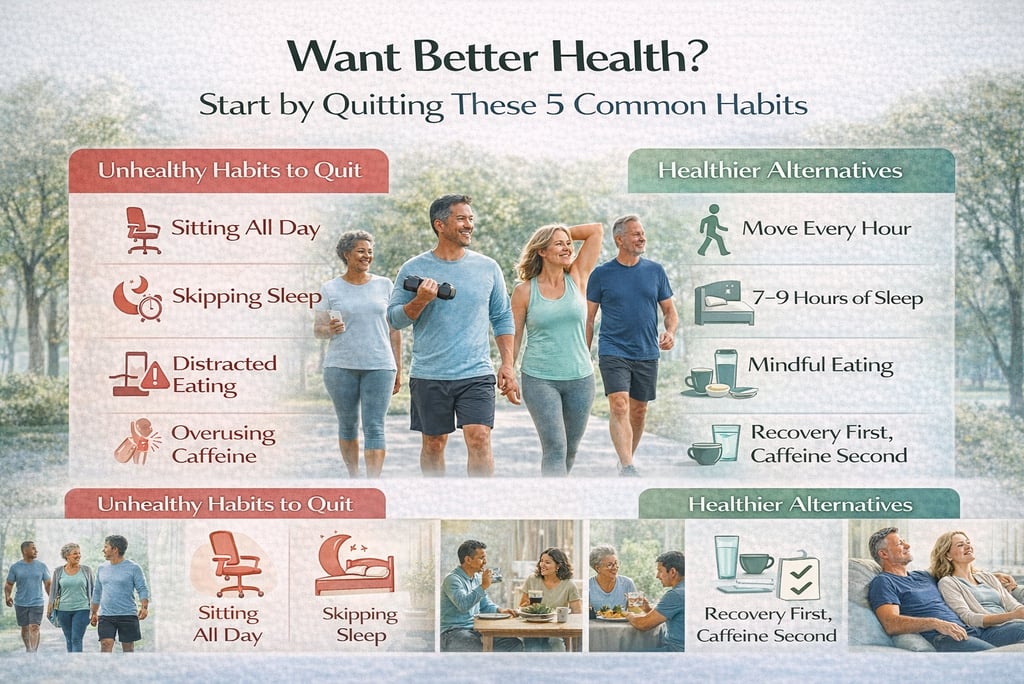
Want Better Health? Start by Quitting These 5 Common Habits
Few things influence well-being like routine choices do. Most of what shows up in your body comes from meals eaten day after day, not weekend fixes. Movement matters - not intense bursts now and then - but steady motion woven into ordinary hours. Rest plays a quiet but powerful role; nights spent calm build resilience slowly. Pressure handled poorly chips away at balance, while small pauses rebuild it. Lasting shifts grow from repetition, never single events.
In the U.S., modern life encourages habits that are:
Convenient but unhealthy
Time-saving but stress-inducing
Comfortable but sedentary
Fat builds up slowly when routines stay off track, piling on strain that drags energy down. Sleep feels heavier even if complaints are rare. Cells respond poorly to insulin without obvious signs at first. Tension lingers beneath calm surfaces, day after day. The body keeps score whether attention is paid or not
Why this topic affects everyday life in America
Many Americans: Sit for long hours at work
Sleep less than recommended
Grab food fast while looking elsewhere
Rely on caffeine instead of rest
Always swamped, never time for self-care
Small choices slip under the radar - yet they pile up quietly over time. Ditching even one or two might lift your energy, steady your mood, ease digestion, strengthen health down the road. Most changes start small, then grow without fanfare.
Habit #1: Sitting for Most of the Day
Why It Hurts Your Health
Prolonged sitting is linked to:
Poor circulation
Back and joint pain
Slower metabolism
Increased risk of chronic disease
Even people who exercise regularly can be affected if they sit the rest of the day.
What to Do Instead
You don’t need to quit your job just break up sitting time:
Stand up every 30 to 60 minutes
Take short walks during breaks
Stretch while watching TV
Use stairs when possible
Movement throughout the day matters as much as workouts.
Habit #2: Skipping Sleep to “Get More Done”
Why It’s So Common
Many Americans treat sleep as optional, believing productivity comes from pushing harder. In reality, poor sleep disrupts:
Appetite regulation
Blood sugar control
Immune function
Mood and focus
Chronic sleep debt often leads to weight gain and burnout.
Healthier Alternative
Aim for 7–9 hours most nights
Keep a consistent bedtime
Reduce screen time before bed
Avoid caffeine late in the day
Better sleep often improves health without changing diet or exercise.
Habit #3: Eating Too Fast and While Distracted
Why It’s a Problem
Eating while scrolling or working causes:
Overeating
Poor digestion
Reduced satisfaction from meals
The brain needs time to register fullness.
What Works Better
Sit down for meals
Eat without screens when possible
Chew slowly
Notice hunger and fullness cues
Mindful eating doesn’t require special diets just attention.
Habit #4: Relying on Caffeine Instead of Recovery
Why It’s Common
Coffee and energy drinks are everywhere in American culture. While moderate caffeine is generally safe, using it to mask exhaustion can backfire.
Too much caffeine may:
Increase anxiety
Disrupt sleep
Worsen energy crashes
Smarter Approach
Use caffeine strategically, not constantly
Hydrate first before reaching for coffee
Address the root causes of fatigue (sleep, stress, nutrition)
Energy should come from habits not stimulants alone.
Habit #5: All-or-Nothing Health Thinking
Why This Habit Is So Damaging
Many people believe:
“If I can’t do it perfectly, why bother?”
“I already messed up today, so I’ll start tomorrow.”
This mindset leads to cycles of motivation and quitting.
A Better Way to Think
Health improves through:
Small, repeatable actions
Flexibility
Consistency over time
One healthy choice today still matters even if the rest of the day isn’t perfect.
Key Takeaways from Quitting These Habits
When Americans let go of these habits, they often notice:
More stable energy
Better digestion
Improved sleep
Reduced stress
Easier weight management
Health improves not by doing everything but by doing fewer things better.
Practical Tips to Start Today
Set a timer to stand up every hour
Go to bed 30 minutes earlier tonight
Eat one meal without distractions
Drink water before your next coffee
Replace “all-or-nothing” thinking with “what’s the next best step?”
Common Misunderstandings
“I Need a Big Lifestyle Overhaul”
You don’t. Small changes compound over time.
“Healthy Living Takes Too Much Time”
Many improvements save time by increasing energy and focus.
FAQs
1. Do I need to quit coffee completely?
No. Moderation and timing matter more than elimination.
2. Is sitting really that bad?
Long, uninterrupted sitting is the issue, not sitting itself.
3. Can small changes really make a difference?
Yes. Consistency beats intensity.
4. Is sleep more important than exercise?
Both matter, but poor sleep can undermine all other efforts.
5. What if I fall back into old habits?
That’s normal. Progress is about returning, not restarting.
Conclusion / Final Thoughts
Better health doesn’t start with extreme diets or punishing workouts. It starts by quitting everyday habits that quietly hold you back.
By sitting less, sleeping more, eating mindfully, reducing caffeine dependence, and letting go of perfectionism, many Americans see real improvements, often faster than expected.
You don’t need to change everything.
You just need to stop doing a few things that aren’t serving you anymore.
Informational Disclaimer
This article is for informational purposes only and does not replace professional medical advice. Consult a healthcare provider before making significant lifestyle changes.
Related Blogs
USA Wellness Pick © 2026


Evidence-Based Health & Wellness Guidance for Americans